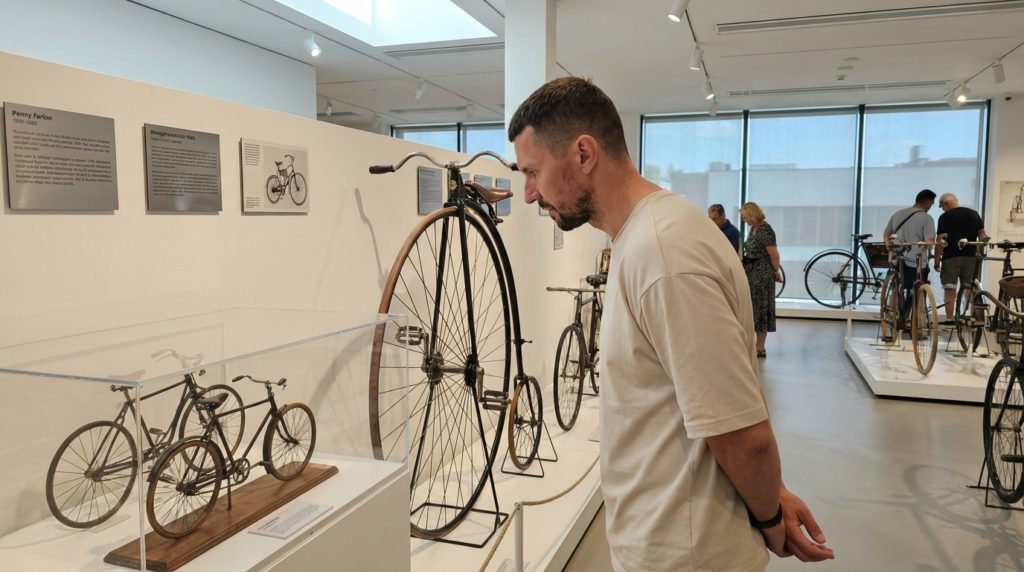
In this article I take a short tour through the development of the bicycle. Of course, I only skim the surface of how road bikes evolved, from the wooden running machine to the carbon road bike. Clearly, every component of the bicycle has its own long history worthy of a whole book.
We will see how non-linear technological progress has been. Things that seem perfectly ordinary and obvious to us were invented practically the day before yesterday, while some rather complex things were created more than a century ago.
#The invention of the bicycle
#The running machine
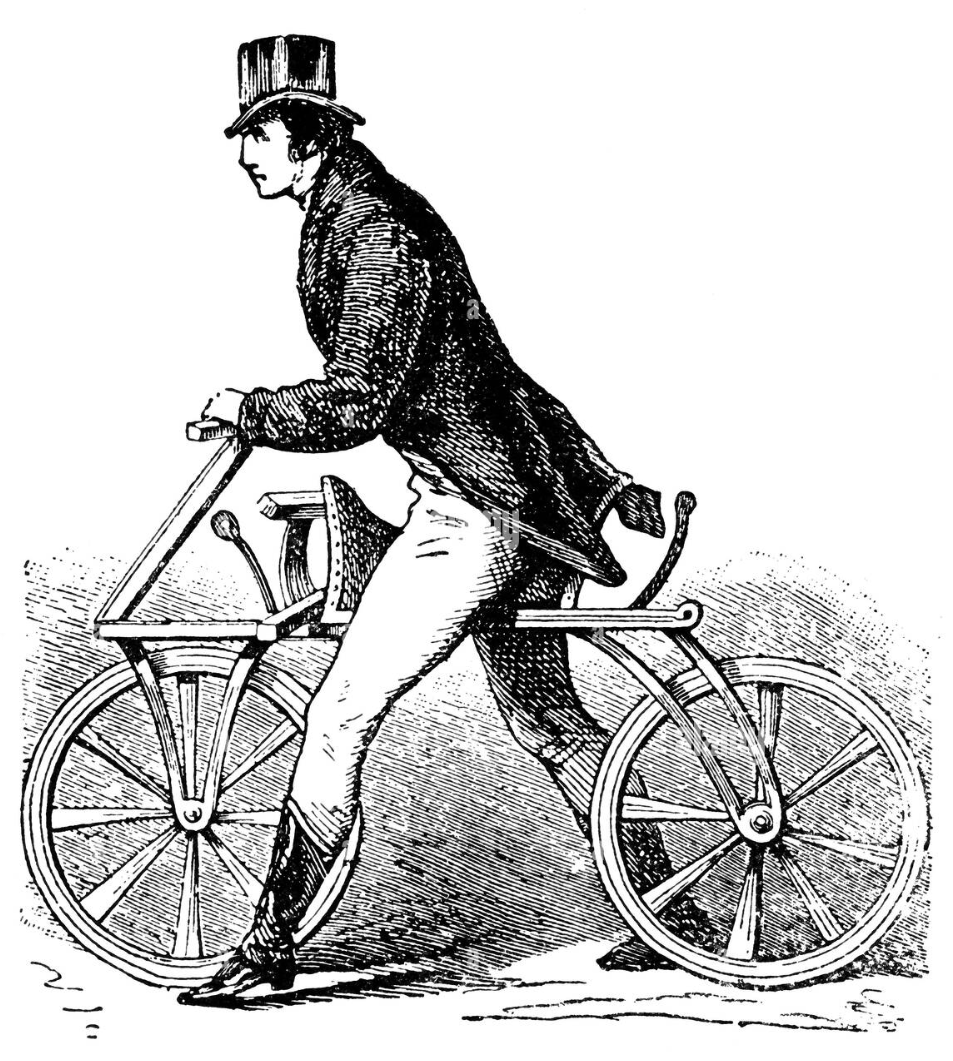
It all began in 1817, when Karl Drais invented the running machine (also called the dandy horse or draisine), which in most respects is the ancestor of the bicycle. What it had in common with the bicycle: a steerable front wheel; the wheel diameter Drais chose became the standard for bicycles for decades to come; the machine had a brake that pressed against the rear wheel, and Drais also came up with a folding stand for parking.
Most importantly, for the same effort this device was roughly twice as fast as walking.
Karl Drais’s invention is still in demand: today toddlers who have only just learned to walk ride a “running machine” — or, as it is now called, a balance bike.
#The penny-farthing
From Drais’s machine, which you pushed along with your feet, we move on to the next iconic stage in the evolution of the bicycle — the penny-farthing. This type of bicycle dominated in the 1870s and 1880s.
The name came later, referring to two coins of different sizes: the large British penny and the small farthing (¼ penny). The front wheel was huge and the rear wheel tiny.
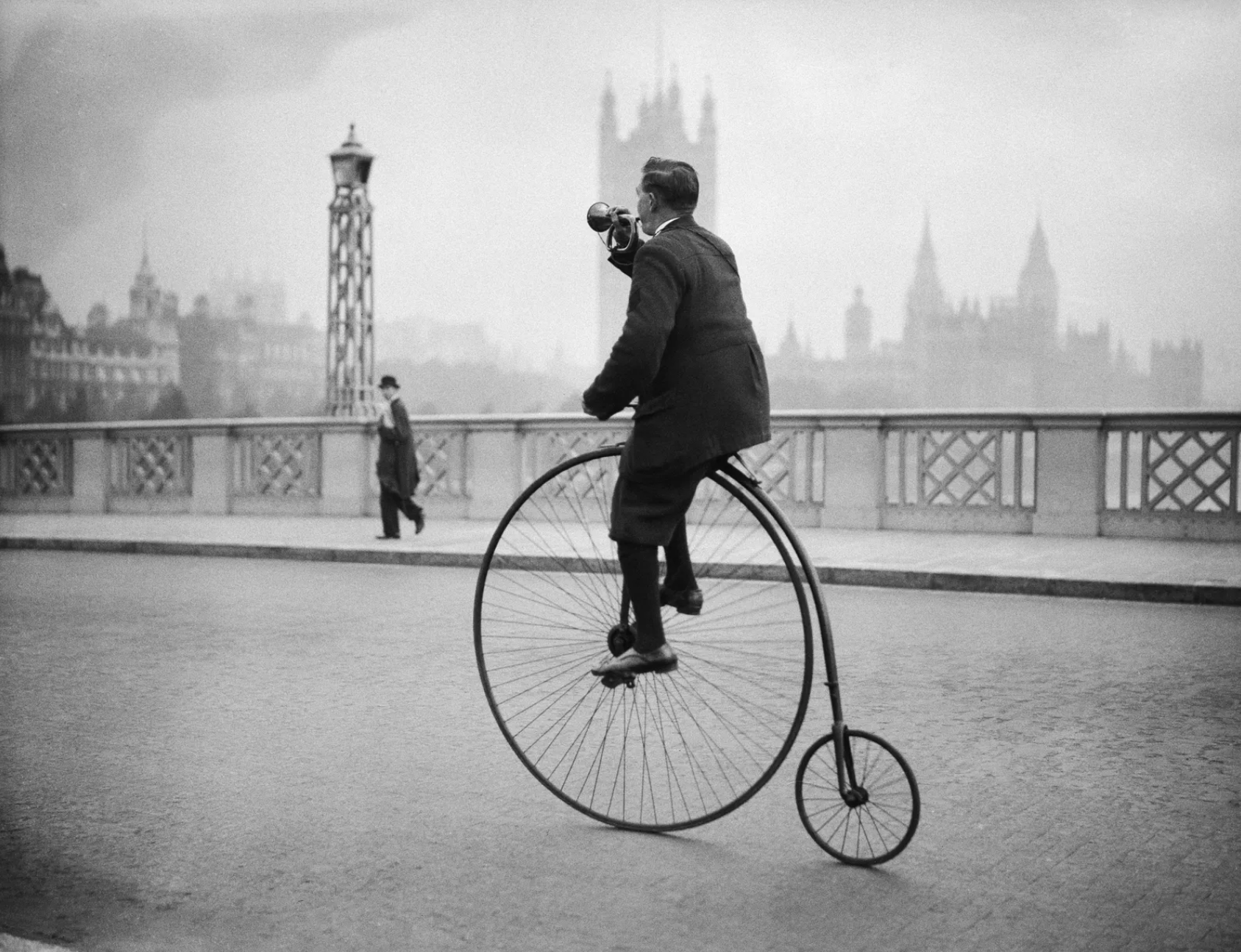
Unlike the draisine, the penny-farthing had pedals. But they were attached directly to the axle of the front wheel. This was a direct consequence of the technical limits of the time: a reliable chain drive had not yet been invented. The main problem for 19th-century engineers was that to go faster you had to make the wheel bigger. With each turn of the pedals a big wheel covered a much greater distance than a small one.
The larger the front wheel, the higher the top speed. Racers of the time could reach 30–40 km/h.
Metal tyres and the lack of suspension made the ride very bumpy. The big wheel, up to 1.5 metres in diameter, rolled better over potholes and cobblestones, acting as a kind of suspension.
The penny-farthing was transport for the bold and agile, and it is no accident that it is called the ancestor of modern extreme cycling. The rider sat almost directly above the front axle. This gave an excellent view but made the machine extremely unstable.
The brakes were weak (usually a pad pressed against the tyre). The only effective way to brake was to brace your feet against the handlebar or… jump off the bike.
The “header” problem: the main danger was that under hard braking or on hitting an obstacle the bike could pitch forward, throwing the rider over the handlebar. This was called “taking a header”.
The consequences of a fall: the rider’s legs got trapped under the handlebar, and he fell head first from a great height (sometimes more than 1.5 metres).
Because of this, penny-farthings were considered “men’s” bicycles. For women in long skirts, climbing up to such a height and getting down safely was practically impossible. Three-wheeled versions existed for ladies and elderly gentlemen.
#The safety bicycle
It took only 68 years from the invention of the “running machine” to create a device that fits our modern understanding of the word “bicycle”.
John Kemp Starley is the man who truly changed the world by creating the prototype of the modern bicycle. He is often called the “father of the bicycle industry” or the “inventor of the modern bicycle”. If Drais’s machine was the first step and the penny-farthing a bold but dangerous experiment, Starley gave us the safe and elegant machine we still ride today. In 1885 John Starley released the Rover safety bicycle.
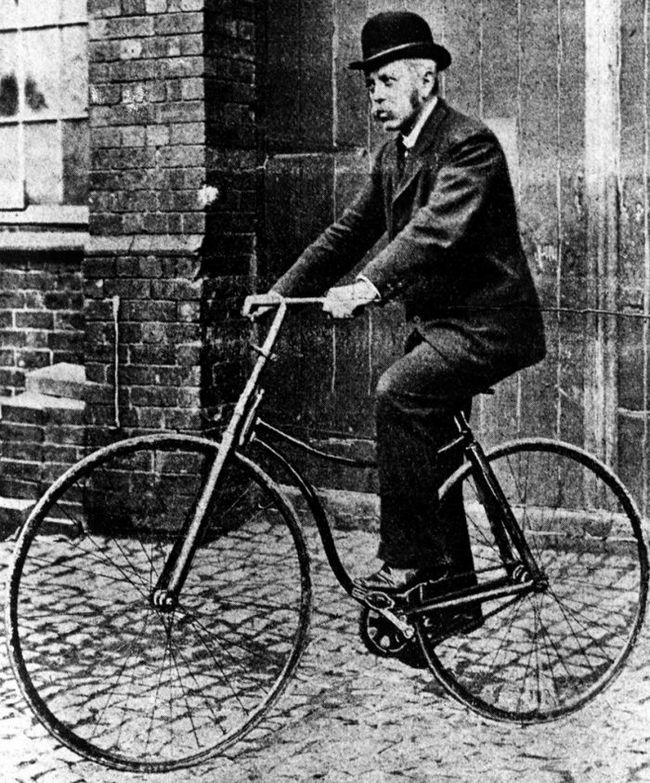
The bicycle had two wheels of the same diameter. This drastically reduced the risk of the rider going over the handlebar. Starley moved the pedals under the rider and connected them to the rear wheel with a chain. This made it possible to use gearing to accelerate efficiently without a giant wheel.
The frame made of steel tubes provided stiffness and strength at a low weight. This geometry is still used in bicycle manufacturing today.
The rider sat much lower and further back from the front wheel than on a penny-farthing. The feet easily reached the ground, allowing a quick stop with no fear of a “header”. The bicycle also had brakes and a steerable front fork.
#Tyres
In 1887 the Scottish veterinarian John Boyd Dunlop solved a problem for his ten-year-old son, who complained about the jolting when riding his bicycle with solid rubber tyres over cobblestones. Dunlop’s solution was simple and elegant: he took a rubber garden hose, measured it to the circumference of the bicycle wheels and glued the ends together to form a ring. He then wrapped it in canvas for strength, attached it to the wheel rim and inflated it with an ordinary football pump. This was how the first pneumatic tyre appeared, creating a cushion of air between the wheel and the road. A little later, on 23 July 1888, Dunlop was granted a patent for his invention.
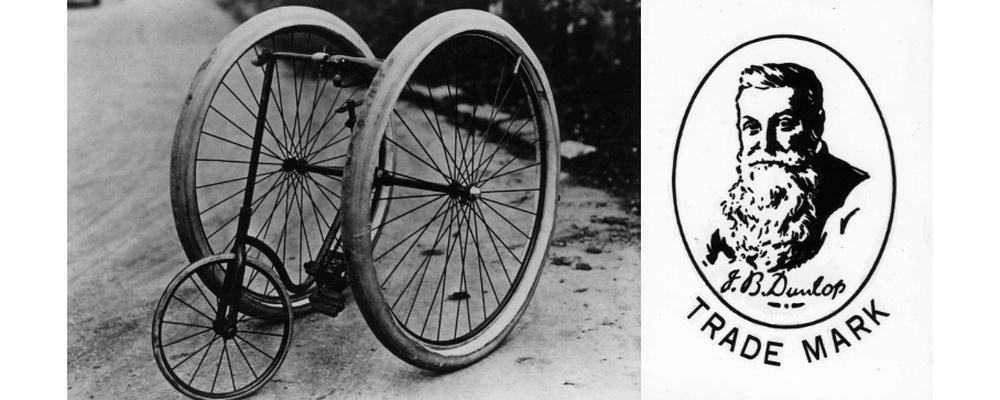
In 1889 the Pneumatic Tyre and Booth’s Cycle Agency was founded (later renamed the Dunlop Pneumatic Tyre Co., now Dunlop Tyres).
Commercial success came quickly thanks to racing. In 1889 the cyclist William Hume, riding on Dunlop tyres, surprised everyone by winning every race he entered, even though he was considered only an average rider. It caused a real sensation.
Some time later it turned out that the idea of the pneumatic tyre was not new. Back in 1845 another Scot, Robert William Thomson, had patented the “Aerial Wheel” for horse-drawn carriages. His invention was simply ahead of its time: rubber manufacturing technology was imperfect, and carriage owners showed no demand for comfort. Thomson’s patent was forgotten, but formally he was the first.
Because of Thomson’s patent, Dunlop’s original patent was invalidated. Nevertheless, Dunlop and his partners managed to patent a number of improvements, and their business continued to flourish.
#The derailleur
#Ideas for a gear changer
The French publisher and cycle tourist Paul de Vivie (pen name Vélocio) is considered one of the first to think about the need to change gear ratios on a bicycle.
While riding over the Col de la République near Saint-Étienne, de Vivie found that a gear that let him ride fast on the flat made climbing painfully slow. This gave him the idea that the gear ratio needed to be changeable.
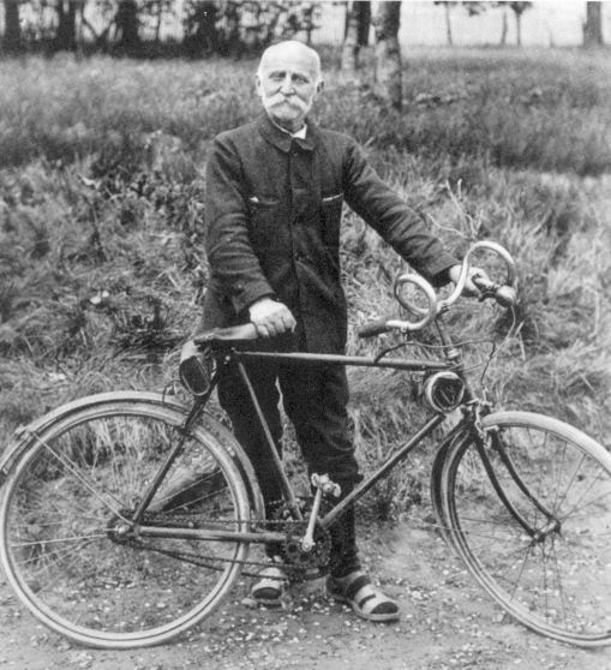
He began experimenting with designs that let the chain move from one sprocket to another to make climbing easier. His first systems were quite primitive. He tried using two chain drives between which the chain had to be moved by hand. A little later he created a system with two chains on either side, giving four speeds.
#Shifting on the move
The idea came in 1889, but full implementation took another 17 years: only in 1906 did de Vivie present the “Chemineau” (Tramp) bicycle, equipped with a system for changing gear on the move. It is considered the first production model with a derailleur. The mechanism allowed the chain to be moved from one sprocket to another without stopping.
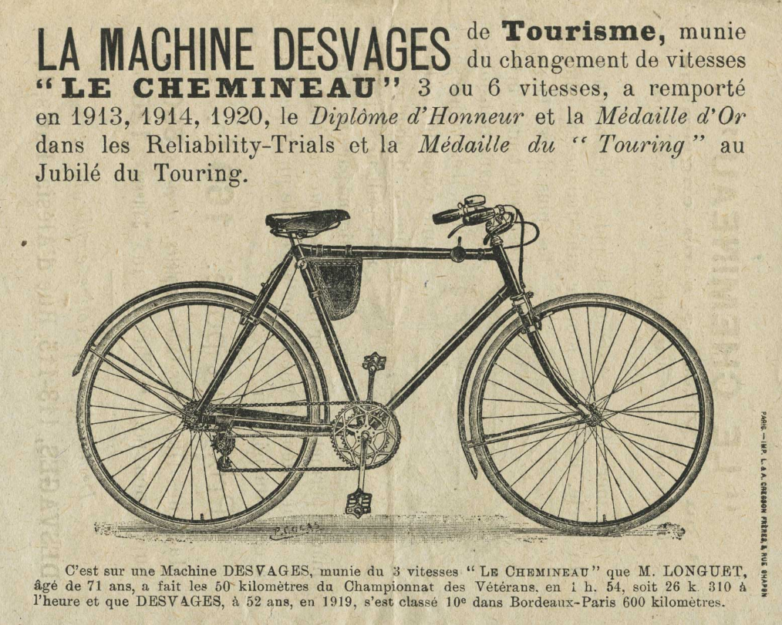
De Vivie’s invention met with fierce resistance, especially from conservative sports officials, namely the UCI, which already existed at that time.
The Tour de France organiser Henri Desgrange called derailleurs “a device for invalids and women” and believed that a real man should win by the strength of his muscles, not by “mechanical trickery”. Because of this, derailleurs were banned from the Tour de France until 1937.
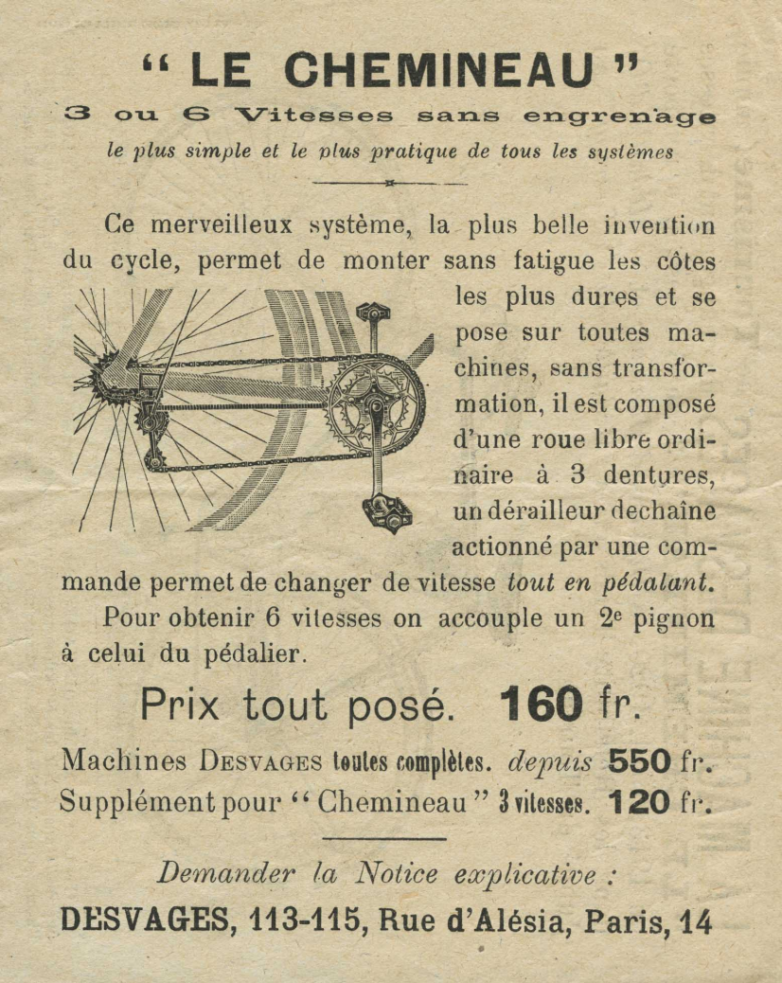
Paul de Vivie died aged 77 after being hit by a tram in Saint-Étienne in 1930. He did not get rich from his invention (he either forgot or did not want to patent it properly). His name is forever written into history as that of the man who made the bicycle a truly versatile means of transport for any journey.
#Shimano Index System (SIS)
To understand the impact of SIS, you have to imagine how gears were changed before. In gear-selection systems, the shifter (the shift lever) had no fixed positions. To change gear, the cyclist moved the lever a smooth distance “by eye” and by ear. Racers literally had to “hunt” for the right gear, taking their attention off the road. The process required a lot of experience. Shifting was slow and imprecise, and the chain often dropped, especially at the worst possible moment (for example, when you wanted to keep your momentum to save energy before a long climb).
In 1984 Shimano presented SIS to the world. Its essence was brilliantly simple and effective: an indexing mechanism with cable-tension detents was built into the shifter, controlling the movement of the derailleur relative to the cassette sprockets. Every press or movement of the lever was accompanied by a clear click. One click was guaranteed to move the chain exactly one sprocket on the cassette.
The shifting precision of SIS allowed Shimano’s engineers to increase the number of sprockets on the cassette. The technology provided the tight tolerances needed for 9-, 10-, 11- and even 12-speed drivetrains.
#Clipless pedals
#Toe clips
Even before John Starley invented the safety bicycle, the idea of attaching the rider’s foot to the pedal appeared. In 1868 the French engineer Clément Ader invented leather straps and metal stops on the pedals, which became known as toe clips. Now cyclists could not only push the pedal down but also “pull” it up with the other foot, making pedalling much more efficient. In terms of efficiency it was a breakthrough, but safety cast doubt on the invention. It was impossible to pull your foot out of the straps quickly, which led to serious injuries in falls. And remember, this was still the era of the front-wheel-drive penny-farthing with its huge wheel.
Later, toe clips would pair up with the “safety bicycle” and be used by racers for about another 100 years.
#The first clipless pedals
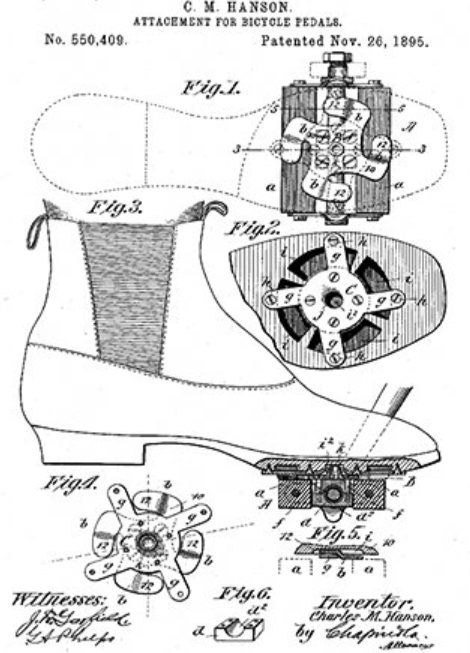
Nevertheless, the idea was taken up, and in 1895 Charles Hanson patented the first design that was already closer to modern clipless pedals. His system held a special shoe in place, released by turning the foot through a small angle. The same year saw some exotic variants, such as suction-cup pedals and magnetic pedals. But such bold ideas never developed further.
#Cinelli M71
In 1971 the Italian racer Cino Cinelli and his bike brand Cinelli presented the M71 clipless pedal.
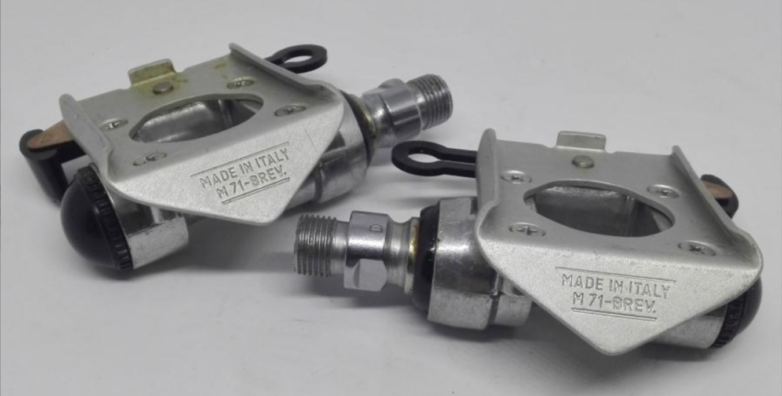
A plastic cleat was screwed to the sole of the cycling shoe. It slotted into a groove on the pedal and was locked by a special lever that had to be closed and opened by hand. The mechanism was reliable, but in a crash the rider could not free their foot quickly — the lever had to be opened by hand. Because of this the M71 pedals earned the grim nickname “death pedals”.
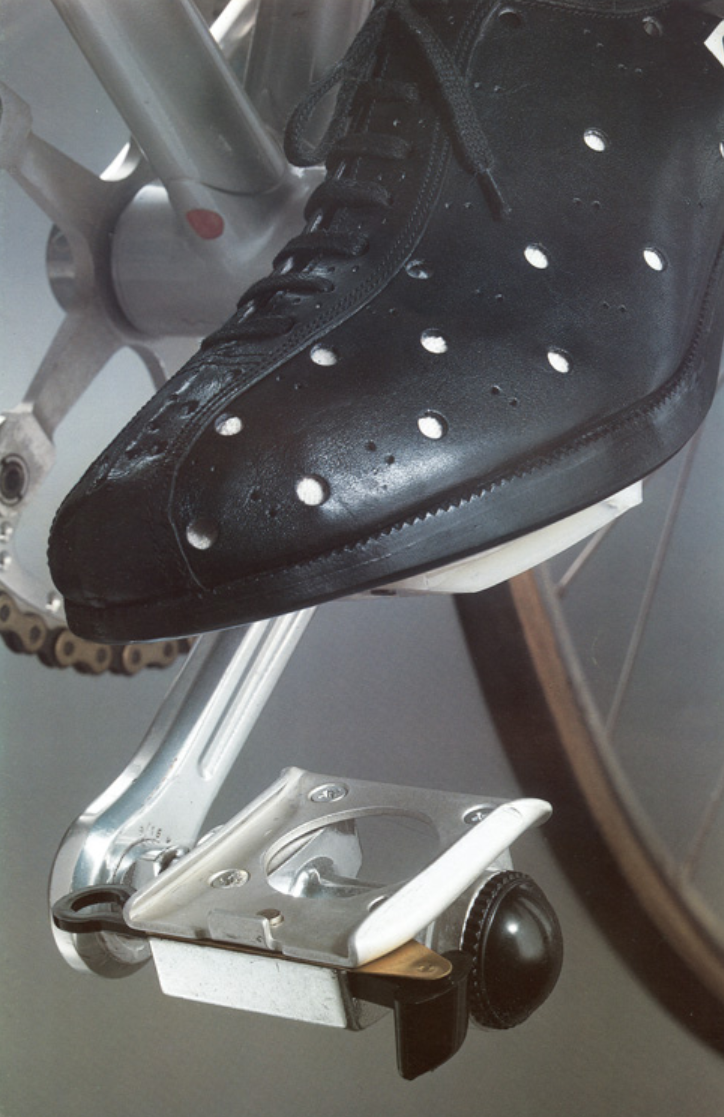
Despite this reputation, these clipless pedals were a breakthrough in cycling. Unlike toe clips, in which the foot wobbled in all directions, Cinelli’s pedals held the shoe firmly and rigidly, making pedalling even more efficient.



 Игорь Огарев